
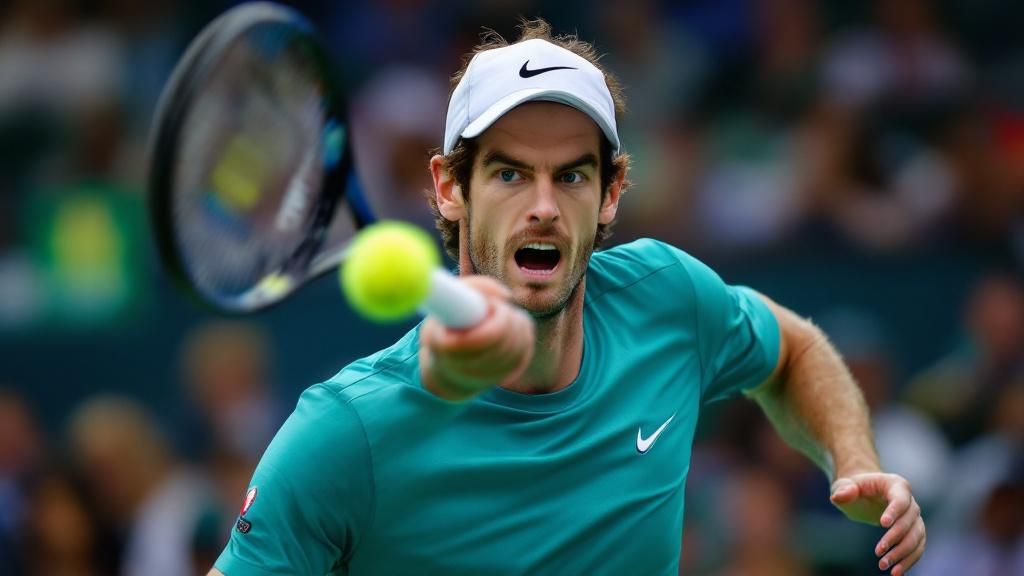
Andy Murray’s carefully orchestrated comeback to competitive tennis has disrupted the British sports landscape, suggesting a possible resurgence for the nation’s most decorated player. Following his career-threatening hip surgery, Murray’s strategic return to competition promises to transform the state of British tennis, encouraging a emerging generation whilst reviving hopes of more Grand Slam triumphs. This article investigates how his disciplined method to competitive play is affecting developmental programmes, nurturing young players, and establishing Britain as a powerful presence in global tennis.
The Returning Champion
Andy Murray’s re-entry into professional sport signifies considerably more than a personal achievement; it symbolises resilience and determination that resonates throughout the British sporting landscape. After facing a serious hip procedure that threatened his career, many questioned whether the thrice Grand Slam victor would ever perform at elite level once more. His decision to stage a comeback, however, demonstrates an unwavering commitment to his craft and an unconquerable determination that has defined his professional journey. The athletics fraternity follows with authentic fascination as Murray tackles this transformative period, showing that age and injury need not shape an athlete’s direction or sporting aspirations.
The ramifications of Murray’s strategic return reach much further than his individual performance on court. His participation in professional tournaments revitalises British tennis, delivering a clear illustration of resilience to junior competitors facing their own obstacles. Moreover, his resurgence tale delivers invaluable lessons in emotional resilience and physical rehabilitation, setting new benchmarks for career longevity. As Murray competes once more, he at the same time coaches the next generation, forging a link connecting proven success and new potential that strengthens the entire British tennis ecosystem.
Influence on British Tennis Development
Murray’s re-entry into professional competition has sparked substantial progress within British tennis infrastructure. His participation in top-tier events elevates the sport’s profile within the UK, attracting greater funding in youth development programmes and practice venues. The knock-on benefits extend beyond professional ranks, encouraging community involvement and encouraging sports authorities to prioritise talent identification and support structures for rising British competitors.
Coaching and Guidance
Beyond his courtside displays, Murray has assumed an increasingly prominent coaching position within the UK tennis sector. His willingness to share expertise acquired through competing at the highest level provides invaluable guidance to younger players charting their own professional paths. This casual mentoring influence complements formal structures, delivering practical insights into competition readiness, mental resilience, and managing professional expectations.
Murray’s openness to up-and-coming athletes represents a departure from conventional power structures within professional sport. By working closely with promising young players, he exhibits a commitment towards the advancement of British tennis. His guidance stretches beyond technical instruction, including career planning, sponsorship negotiations, and psychological techniques crucial for achieving enduring success in international competition.
- Provides expert advice on event choice and planning
- Shares psychological strength methods developed throughout career
- Facilitates connections to coaching and advisory networks
- Demonstrates workplace excellence through reliable dedication
- Encourages equilibrium between drive and personal wellbeing
Performance Comparison and Rankings
Murray’s comeback to professional competition has shown impressive durability, with his statistical indicators revealing a athlete seeking to recapture his position amongst tennis’s elite. Despite the inherent physical rigours of top-tier competition, his competitive standing has progressively advanced, showcasing his technical proficiency and mental fortitude. His successes against recognised opponents have sparked renewed debate about his ability to compete for Grand Slam honours, whilst simultaneously providing crucial information on his rehabilitation status and playing condition.
The deliberate strategy of Murray’s event choices has been crucial in overseeing his recovery whilst maintaining competitive edge. By thoughtfully juggling elite-level events with adequate recovery periods, he has enhanced his performance trajectory without compromising long-term sustainability. His results have energised British tennis enthusiasts and commentators alike, proving that age and previous injury need not diminish a player’s competitive ambitions or accomplishments at the top levels of elite competition.
Upcoming Opportunities and Impact
Andy Murray’s deliberate re-entry to the professional circuit has fundamentally altered perceptions of what represents a successful tennis career. His measured approach demonstrates that extended careers and focused competition can function alongside physical challenges, offering valuable lessons to emerging competitors worldwide. The broader impact of his resurgence go further than personal achievement; Murray’s involvement in professional tennis energises the British tennis system, attracting financial support and public interest once allocated to other areas. His influence on younger players illustrates how seasoned expertise and determination surpass conventional career trajectories, setting new benchmarks for athletic perseverance.
Looking forward, Murray’s legacy will undoubtedly include more than tournament victories and ranking positions. His commitment to mentoring up-and-coming British competitors has built a lasting foundation for the coming generation of competitors aiming for international success. By combining competitive drive with mentoring obligations, Murray has positioned himself as both playing member and steward of British tennis’s future. This combined position strengthens the nation’s sporting framework whilst ensuring his substantial knowledge benefits the sport far beyond his final competitive involvement, cementing his status as pivotal force within British sporting history.
